When Keith was first diagnosed with prostate cancer, he found himself facing a very different emotional landscape than he had during his battle with oropharyngeal cancer in 2017. This time, uncertainty loomed larger. His doctor’s recommendation to delay treatment left him uneasy. So, he and his wife discussed their options and did what many might hesitate to do. They spoke up to advocate for Keith’s health.
Valuable advice and research
A friend and fellow service member who had been open about his own cancer journey urged Keith to seek second and third opinions, even if it meant traveling out of state. That advice may have been lifesaving. Two specialists reviewed Keith’s biopsy, his age and his family history and delivered a sobering message: “You don’t have a choice. You have an aggressive form of prostate cancer. Active surveillance is not the answer for you.”

With his prostatectomy delayed indefinitely due to pandemic-related issues, Keith dove into research and discovered a study on a new PSMA PET scan that had the potential to eliminate the need for radiation and chemotherapy. This was particularly relieving news for Keith, who had already endured 37 rounds of radiation as part of his oropharyngeal cancer treatment.
A new lease on life
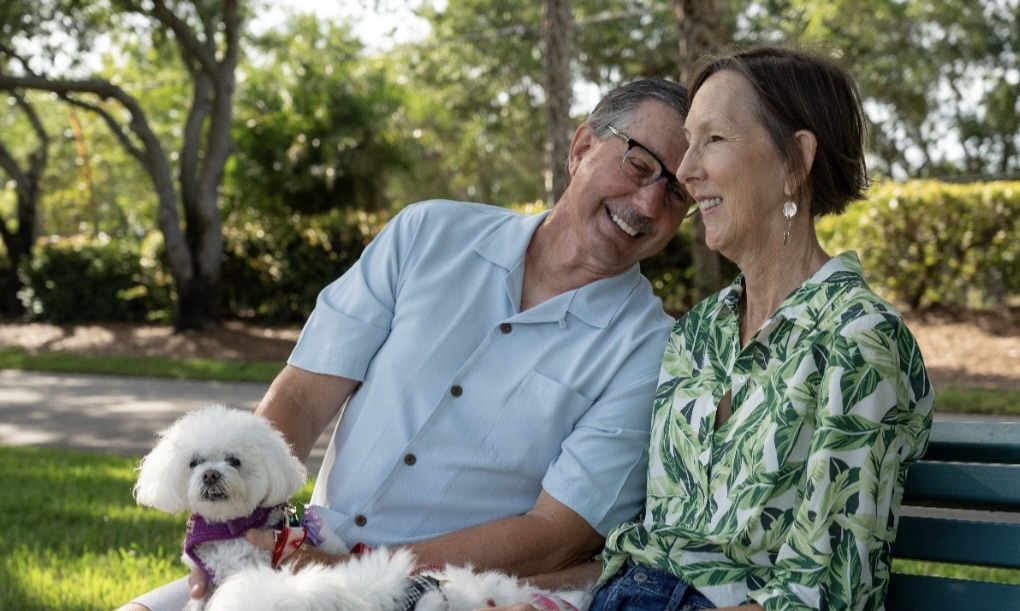
Today, Keith is in his mid-60s. He plays golf, pickleball and bikes up to 30 miles a week. He also works full-time as the Director of Facilities for a U.S. Federal Courthouse, overseeing maintenance and budgets. Life is full and he’s savoring every moment.

My job is just to be his advocate at home and with the doctor, making sure that he is not forgotten about or neglected during his hospital visits and stays.
Keith credits his recovery not only to medical advances but to the unwavering support of his friends and family—especially his wife, Tracy.
Keith has also become a vocal advocate for others dealing with a prostate cancer diagnosis, mentoring and educating fellow veterans newly diagnosed with prostate cancer, encouraging them to seek support groups and speak openly and confidently about their fears. Vulnerability, Keith claims, is key to healing.
Keith’s story is a testament to the power of persistence, community and compassion. It’s a reminder that facing cancer isn’t just about treatment—it’s about connection, courage and the choices that shape our path forward.